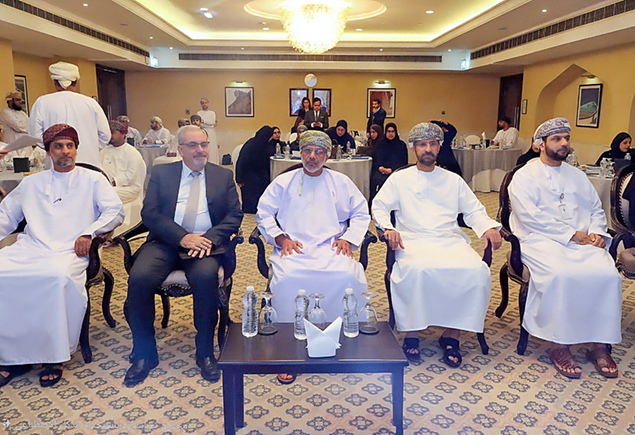
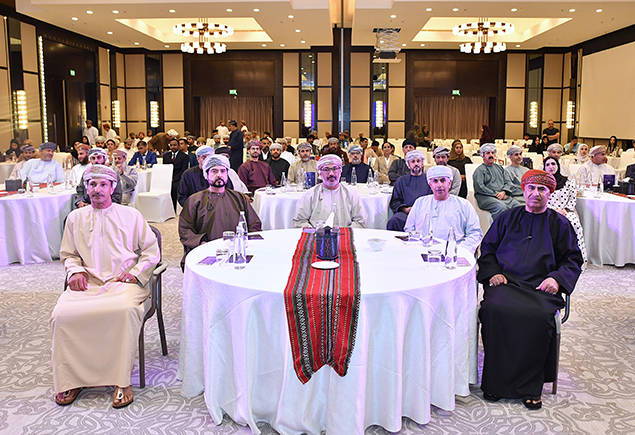
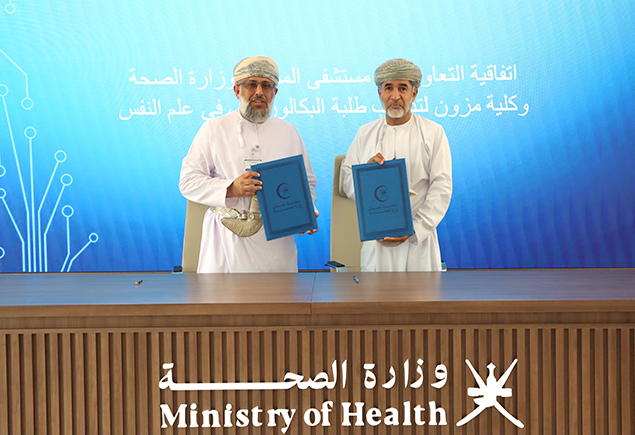
As part of efforts to enhance the readiness of the health sector to respond to emergencies, the Ministry of Health launched today (Monday) the first foundational training program for members of the National Medical Emergency Team. The opening was held under the patronage of His Excellency Dr. Saeed bin Harib Al-Lamki, MOH’s Undersecretary for Health Affairs, at the Crowne Plaza Hotel, Qurum.
Organized by the Ministry of Health, represented by the National Center for Emergency and Health Risk Management, in cooperation with the World Health Organization (WHO), the program aims to strengthen the preparedness and operational capacity of the National Medical Emergency Team for activation and deployment. It seeks to support health systems affected by various types of emergencies by equipping team members with essential knowledge and skills required for safe, coordinated field operations in line with best recognized practices.
The training program covers a range of topics, including the role of medical emergency teams in supporting affected local health systems, defining roles and responsibilities within the teams, and promoting team self-sufficiency. It also addresses the application of basic measures to protect personal health and safety during and after deployment, as well as enhancing team safety and security while carrying out missions.
In addition, the program includes guidance on engaging with local health authorities and affected communities during emergencies, applying essential standards and protocols for emergency healthcare, and understanding ethical values and legislative regulations that must be observed during activation and field deployment. Participants also receive training on the use of equipment, supplies, and field structures for medical emergency teams, while emphasizing resilience, teamwork, and problem-solving skills in deployment environments.
The program targets (30) participants, including physicians who are graduates of the Oman Medical Specialty Board or its equivalent in emergency medicine, intensive care, general surgery, and family medicine, as well as specialized nurses in emergency care, intensive care, and surgery. It also includes allied health professionals such as pharmacists, laboratory and radiology technicians, occupational health specialists, and paramedics.
The four-day program consists of both theoretical and practical components, including simulation exercises, and is delivered by a group of specialized experts with extensive practical experience and field operations in national medical emergency teams and emergency management from the World Health Organization.
It is noteworthy that this training program marks the first in a series of specialized courses planned for the National Medical Emergency Team throughout the year, to be implemented in cooperation with the World Health Organization and other specialized institutions in the field.