MOH Receives Investment Case Results in NCD Prevention & Control
MOH Receives Investment Case Results in NCD Prevention & Control
03 February 2022
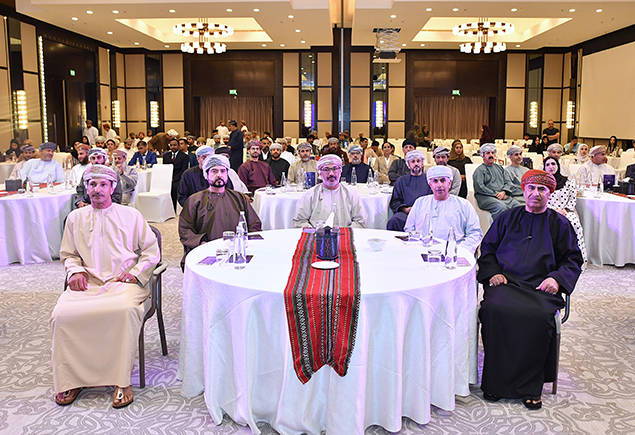
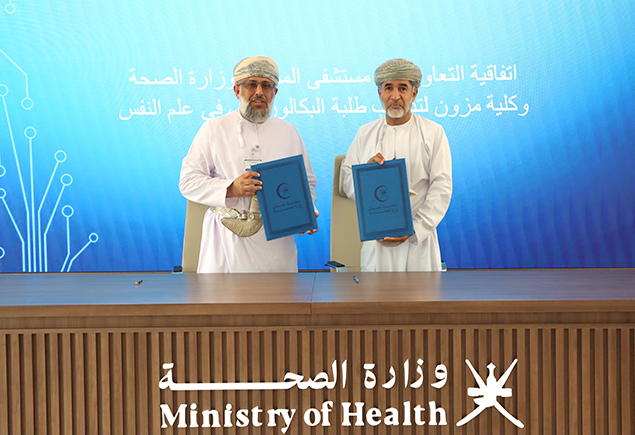
In an official meeting this morning, the Ministry of Health (MOH) was handed over the results of The Case for Investment in the prevention and control of Non-communicable diseases (NCD).
This meeting was attended by H.E. Dr. Mohammed bin Saif Al-Hosni, MOH Undersecretary of Health Affairs and H.E. Dr. Fatima bint Mohammed Al-Ajmi, MOH Undersecretary of Administrative, Planning & Financial Affairs along with the present of H.E. Sulaiman Al Dakheel, General Manager of the Gulf Health Council.
The Sultanate of Oman, represented by the Ministry of Health, has conducted this Case for investment as part of a joint GCC project which the Gulf Health Council supervised. The research team included members from several organizations, including the United Nations development program, The United Nations Interagency taskforce for the prevention and control of non-communicable diseases, The World Health Organization and the Ministry of Health in Oman represented by the Department of Non-communicable Diseases in the Directorate General of Primary Healthcare.
This study was conducted in view of the significant burden of non-communicable diseases in society, as non-communicable diseases cause 72% of all deaths in the Sultanate of Oman. Nearly 1 in 5 adults die from non-communicable diseases under the age of 70. The Case of investment in Non-communicable diseases in the Sultanate of Oman demonstrated that NCD cost the Oman economy 1.1 Billion Omani Riyals (2.8 Billion USD) every year, which is equivalent to 3.59% of the GDP in 2019. These annual costs include 609 million Omani Riyals (1.6 Billion USD) in Healthcare expenditures and 486 million Omani Riyals (1.3 Billion USD) in lost productive capacities due to premature mortality and disabilities.
In 2017, the leading cause of NCD deaths in Oman was cardiovascular disease, which accounted for 36% of all deaths in the country, followed by cancer (11%) and diabetes (8%).
The NCD case for Investment in Oman demonstrated that Oman could reduce its burden of non-communicable diseases by investing in four cost-effective and proven policy and intervention packages over the next 15 years (till 2034). By doing so, Oman could save 671 million Omani Riyals (1.8 Billion USD) in economic output losses. Furthermore, by investing in these four interventions and policy packages, Oman could save 18,724 lives at least and reduce the incidence of diseases.
The Case for investment also demonstrated that each of the best-buy intervention packages is associated with benefits outweighing the costs. Salt reduction had the highest return on investment (8.6:1), followed by tobacco control (4.8:1), cardiovascular and diabetes clinical interventions (2.3:1) and diet and physical activity awareness (2:1). An extended 20-year analysis shows that the return on investment continues to increase to 16.6, 10.9, 3.8 and 3.7 for the intervention packages in the same order as listed above.
One of the key recommendations concluded by this study is the importance of strengthening multi-sectoral, whole-of-government and whole of society action on NCDs. This would help Oman reap significant health and economic benefits from scaled-up investments to reduce non-communicable diseases and continue to be a regional leader in non-communicable diseases.
It is worth noting that the Sultanate of Oman had taken significant steps towards addressing the burden of non-communicable diseases. The most important of these steps was developing a national policy on preventing and controlling non-communicable diseases, strengthened by creating the National multisectoral action plan, which was approved by the Ministerial council in 2018.