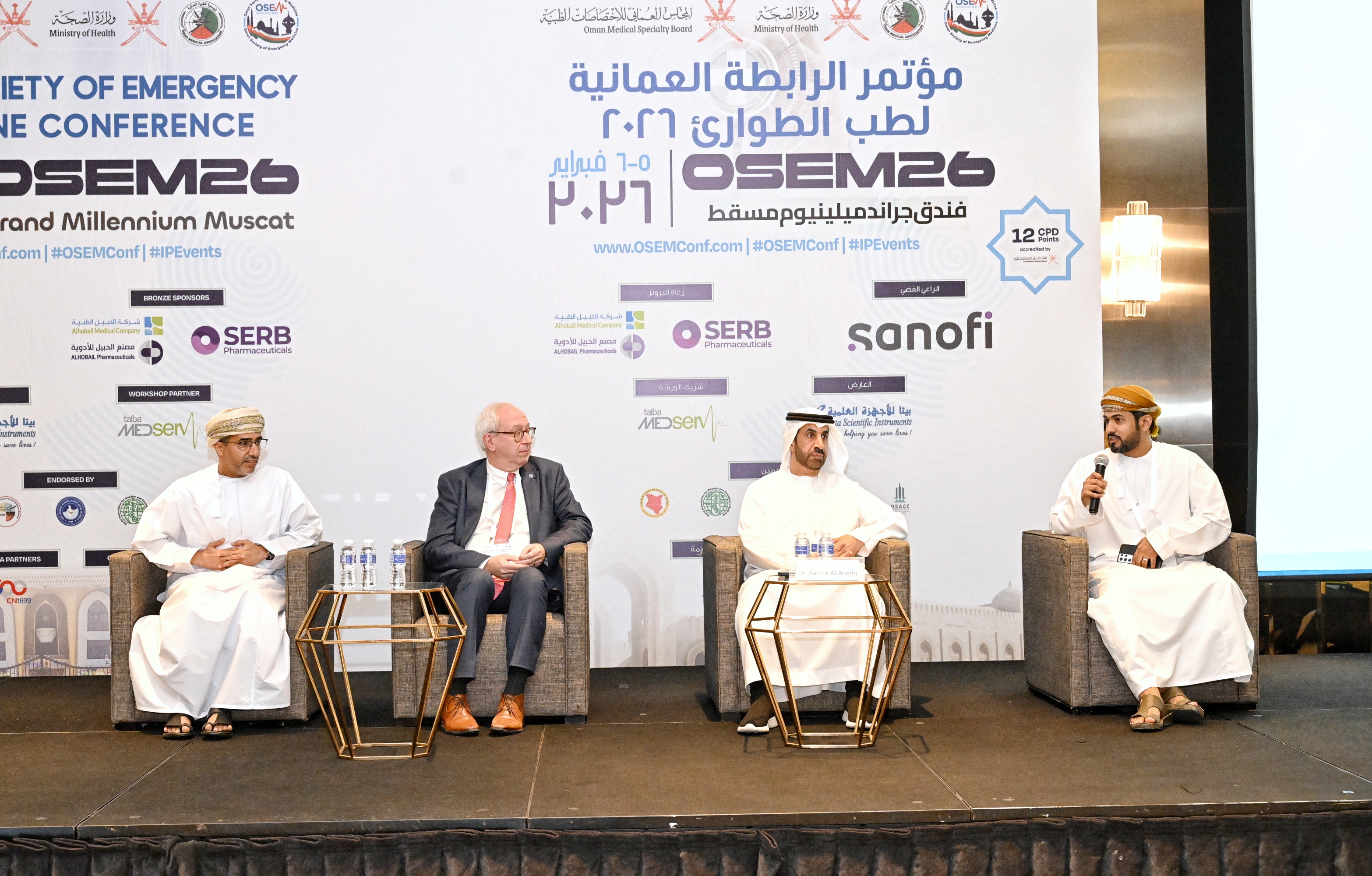
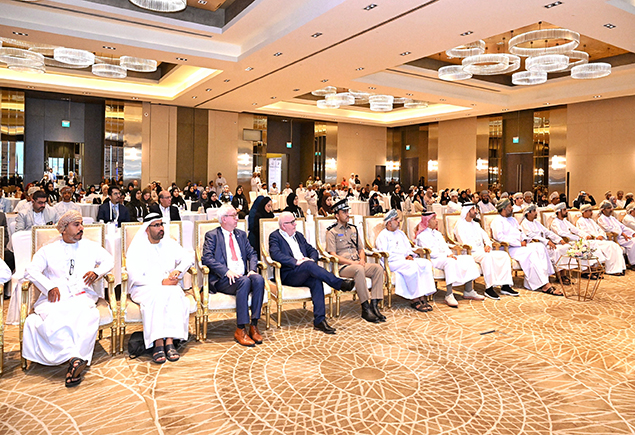
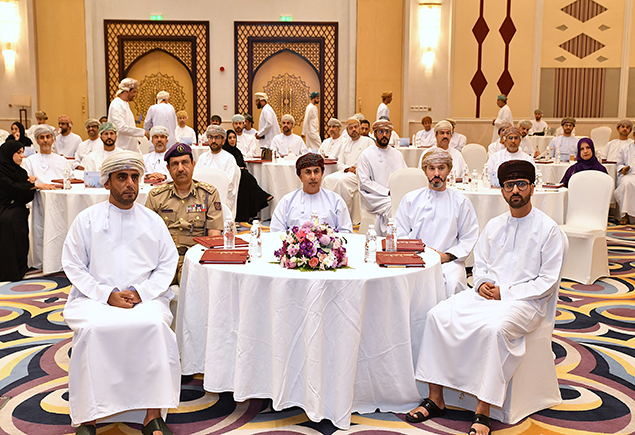
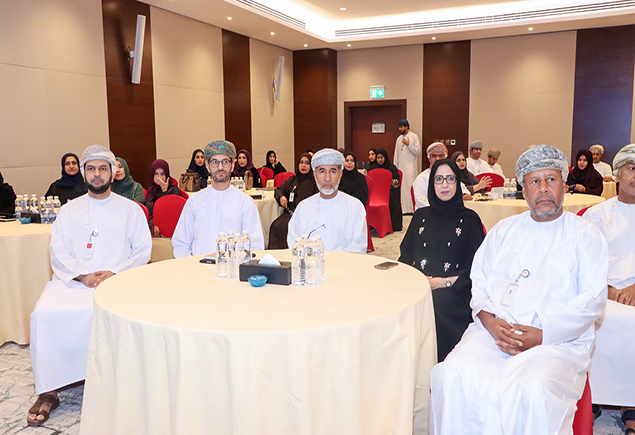
The Oman Society of Emergency Medicine Conference (OSEM26) commenced today (Thursday) at the Grand Millennium Muscat Hotel, with wide participation from physicians, nurses, researchers, and specialists in emergency healthcare from the Sultanate of Oman, as well as from various countries across the region and the world.
The opening ceremony of the conference was held under the patronage of H.E. Dr. Abdullah bin Hamoud Al-Harthi, Undersecretary of the Ministry of Social Development for Persons with Disabilities Affairs, in the presence of a number of officials.
In his speech at the official opening of the conference, Dr. Hassan bin Issa Al Balushi, Consultant in Emergency Medicine and Toxicology and Chair of the OSEM26 Organizing Committee, highlighted that this year’s conference is held under the theme, “Advancing Excellence in Emergency Care: Innovation, Integration, and Impact”, stressing that the theme reflects a practical approach aimed at developing emergency care, fostering innovation in its practices, integrating the roles of medical teams, and achieving tangible impact.
Dr. Al Balushi further noted that the conference’s scientific program is designed to translate this theme into practical reality. It includes 62 scientific lectures delivered by 72 national and international experts across various areas of emergency medicine, alongside six advanced workshops focused on clinical skills, critical decision-making, and multidisciplinary teamwork. The participation of speakers from multiple countries enhances knowledge exchange and aligns with global advancements in the field.
He also added that the conference presents and reviews over 40 scientific research papers, 30 of which are showcased in the accompanying scientific exhibition, promoting a culture of research and knowledge exchange among specialists. During his address, Dr. Hassan announced several landmark initiatives by the Omani Society for Emergency Medicine aimed at extending the impact of emergency medicine from healthcare institutions to the wider community. These initiatives include the First Aid Book – Community Edition (first release), designed to equip the public with essential life-saving knowledge; Post-Emergency Department Follow-Up Cards, emphasizing the continuity of care beyond patient discharge; and the Omani Journal of Emergency Medicine (ONEM), a national scientific platform dedicated to disseminating knowledge, supporting research, and highlighting experiences and expertise in the field of emergency medicine.
The conference serves as an advanced scientific platform aimed at discussing the latest scientific and practical developments in the field of emergency medicine, enhancing the quality of emergency healthcare, and advancing clinical practices in line with the latest internationally recognized, evidence-based standards.
OSEM26 features a rich three-day scientific program comprising a range of specialized educational and practical tracks that cover a broad range of emergency medicine disciplines. Key areas include resuscitation, disaster medicine and emergency response, wilderness medicine, trauma care, pediatric emergency medicine, medical toxicology, emergency department nursing, innovation and scientific research in emergency medicine, point-of-care ultrasound (POCUS), and sports medicine in emergency settings.
The conference also addresses several advanced topics focused on enhancing patient safety, improving diagnostic accuracy, and accelerating medical intervention in critical cases.
Furthermore, the conference showcases more than 30 scientific research papers presented by researchers and specialists from around the world, highlighting the latest studies, clinical trials, and innovative practices in the field of emergency medicine. This contributes to fostering a strong research culture and promoting knowledge exchange among participants.
OSEM26 aims to enhance the professional competencies of emergency medicine practitioners, support the exchange of scientific expertise, and stimulate research and professional development. The conference also seeks to build local, regional, and international scientific partnerships that contribute to improving patient safety and the quality of emergency healthcare in the Sultanate of Oman and the region.
Prior to the conference’s official scientific sessions, a series of specialized hands-on training workshops were conducted, focusing on enhancing participants’ practical skills and strengthening clinical readiness in managing critical cases, through realistic scenarios that simulate the working environment of emergency departments.
These workshops covered advanced areas, including non-invasive ventilation (NIV) in emergency cases, advanced electrocardiogram (ECG) interpretation, the management of critically ill pediatric patients, and the use of point-of-care ultrasound (POCUS) in emergency and critical settings, in addition to disaster medicine and emergency response. The training programs aimed to enhance professional competence and strengthen clinical skills among participants.