The Directorate General of Health Services in South Batinah Governorate has responded to the Corona Virus 2019 pandemic in parallel with the actions taken on the national level. As Health Services Directorates, South Al Batinah Health has developed the required measures to combat this pandemic since the announcement of the outbreak.
The Governorate Health Services with all its health institutions and departments carried out prompt response in cooperation with the relevant sectors to review and update the emergency and crises plan to tackle the pandemic.
Moreover, all health institutions and concerned departments in the DGHS have developed supportive plans consistent with the general plan of the governorate. health workers have also been trained at various stages and levels on defining suspected cases, the way to deal with them, the method of epidemiological surveillance, means of reporting cases and infection prevention methods in the health institutions, in addition to methods of washing and cleaning hands, disinfecting surfaces, and the proper use of personal protective equipment (PPE).The training included all those in health institutions, including technicians and administrators, as well as cleaners and other important cadres such as ambulance drivers, along with workers in private health institutions.
The preparation phase stressed the provision of the necessary medical supplies and tools such as sterilization tools, hygiene and examination materials for sampling , (PPE) and the necessary medications, in addition to updating and monitoring electronic surveillance systems and solving some technical problems in Ashifa system.
The continuous institutional visits by the director general, directors of departments, and supervisors of various health programs since the first days of the announcement of the epidemic in the world have had a great impact in monitoring the progress of work and determining the readiness of health institutions at all levels to address the COVID-19 pandemic if cases are received and positive results are registered. Drills were further conducted in this regard by the DG’s department of Disaster and Crisis.
All health educators participated in the community and institutional education on various issues related to the pandemic using all types of educational means, including publications, film materials, lectures, seminars, community awareness campaigns and disseminating messages through various social media. In addition to the important role performed by the community health support groups in cooperation with other public sectors, sports, cultural and volunteer teams.
Health cadres produced educational materials in different forms to spread health awareness among members of society on COVID-19 epidemic, in addition to the active role played by different health committees and villages in spreading community awareness.
Advertising campaigns were intensified to urge community members to stay at home and adhere to different prevention methods with the registration of positive cases in the Sultanate. Institutional visits were also intensified by officials in the Directorate with the aim of providing support to health workers and evaluating the performance of institutions in detecting COVID-19 according to the algorithms issued by the Ministry and updated at intervals in line with developments in the quality of detected cases, in addition to assessing the knowledge of healthcare providers with these updates continuously.
Field visits identified major obstacles and issues that face the application of policies and systems in the health institutions epidemiological surveillance, and finding swift proper solutions to ensure workflow.
It is worth noting that the 24-hour hotline in the directorate that responses to the health workers' questions on how to deal with suspected and detected cases has had a great impact in overcoming many difficulties and resolving problems in a timely manner by the Department of Infectious Diseases Surveillance and Control.Another phone line has also been established to answer the community members' calls and questions by the Crisis and Emergency Operations Room at the Directorate since the emergency system has been activated.
During this period, the process of updating the various protocols and policies by the Ministry of Health in line with the progress of the events is continued. Thus, the DGHS represented by the Primary Health Care Department worked to spread these policies, emphasizing on the institutions to follow them.
Moreover, the Governorate’s DGHS, in coordination with the partners in the accommodation sector, provided a health clinic with trained medical staff in the institutional isolation places in the governorate to deliver the required health services to the quarantined individuals.
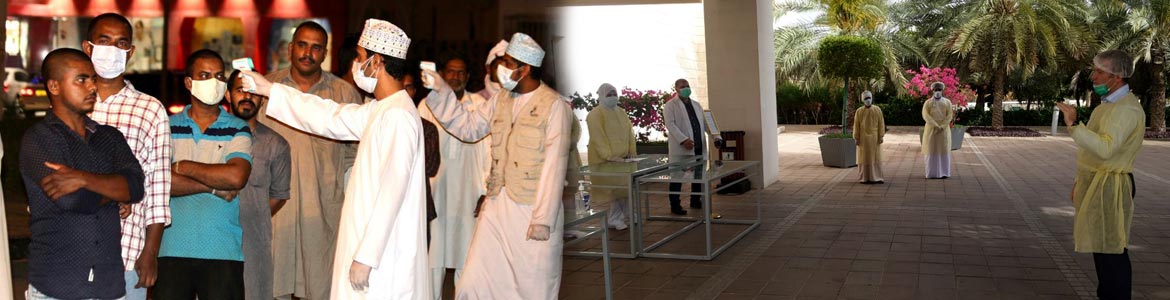
With the development of events and the increase in the numbers of confirmed cases, especially among expatriate workers, medical fitness examination centers in Barka and Rustaq have also been reopened to be a center for examining expatriate workers with respiratory symptoms. Moreover, screening campaigns were conducted at the expatriate workers assemblies in the governorate’s various wilayats, especially in Barka and Rustaq in where they were preceded by awareness campaigns in different languages to encourage expatriate workers to visit various examination centers.
The epidemiological surveillance process of the cases that have been continued in the governorate various wilayats through health monitoring teams trained by the Infectious Disease Surveillance and Control Department after the number of cases registered in the South Al Batinah Governorate increased. The active cases, close contacts, and suspected cases that were directed to home isolation are followed up daily by their health institutions to check on their condition and provide appropriate instructions.