The Sultanate of Oman received today (Wednesday) the World Health Organization Certification for validation of the elimination of mother-to-child transmission (EMTCT) of HIV and syphilis, becoming the first country to be validated in the Eastern Mediterranean Region.
By receiving this validation, Oman achieved the global health strategy for the period 2022-2030, which aims to realize the goal of ending MTCT of HIV in at least (50) countries by 2025, and in (100) countries by 2030.
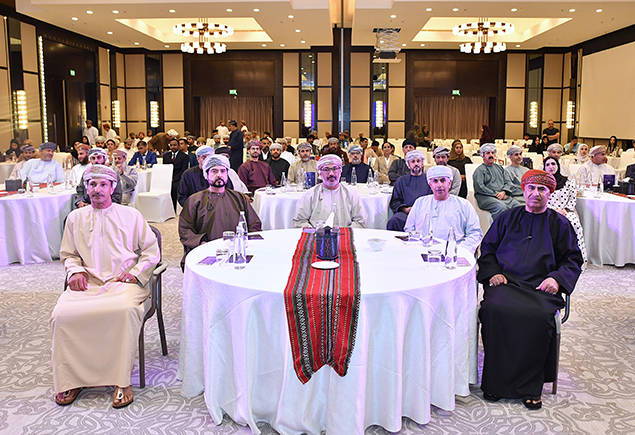
The ceremony of Sultanate of Oman's achievement in Eliminating Mother to Child Transmission of HIV and Syphilis was held at Al Bustan Palace under the auspices of H.E. Dr. Hilal Ali Al Sabti, Minister of Health, with the presence of H.E. Dr. Laila Ahmed Awad Al Najjar, Minister of Social Development in addition to number of honorable members of State Council, Excellencies, and local and international experts.
The ceremony included a speech of National EMTCT Validation Committee’s Chair Dr. Saif Salim Al Abri, MOH’s Director General of Disease Surveillance & Control, where he stressed that this achievement is a translation of the efficiency of the health system and the quality of services delivered in the public and private health institutions in the Sultanate of Oman. It further reflects aspects of cooperation and harmony among various legislative and executive governmental bodies and the civil community institutions.
The Chair of National EMTCT Validation Committee pointed out that the carefully planned and implemented institutional work has paved the path for this accomplishment. Details of various phases of the experiment have been documented in a highly professional thorough manner according to high-quality standards to ensure efficient local, regional, and global utilization.
He added that at this point, a new phase of work to upgrade public health programs, benefiting from this experience, would begin. The Sultanate of Oman is committed to eliminating HIV, hepatitis, and sexually transmitted diseases by 2030.
Dr. Al Abri highlighted efforts and achievements of the country in the fight against these particular areas of diseases including the development of national strategic and operational plan of HIV and Sexually Transmitted Infections (2020-2030), in addition to working on developing a joint plan for HIV, viral hepatitis, and STIs. Moreover, the country is making a steady progress in achieving UNAIDS Targets (90-90-90: treatment for all).
H. E. Dr. Tedros Adhanom Ghebreyesus, WHO Director General in his recorded statement commended the Sultanate of Oman on becoming the first WHO-EMR to be validated for EMTC of HIV and syphilis. By this, Oman is considered the 16 country to eliminate vertical transmission of HIV and syphilis.
WHO Director General noted that this fruitful journey was facilitated by exceptional political commitment, adding that EMTC of HIV and syphilis is a tremendous achievement, but the work does not stop there, maintaining the status will require sustain broad efforts to prevent new HIV and syphilis infections throughout the entire population.
He further stated that Oman could build on the success to work on the EMTC of the hepatitis B virus.
H. E. Dr. Tedros Adhanom Ghebreyesus confirmed the WHO and partners commitment to supporting Oman to strengthen its health system to provide comprehensive services that protect the rights of women living with HIV or hepatitis B and engage women in health service planning and delivery.
Furthermore, H. E. Dr. Ahmed Salim Al Mandhari, WHO Regional Director of Eastern Mediterranean Region pointed out in his address that this accomplishment indicates the Sultanate of Oman commitment in implementing evidence-based public health interventions, and ensuring access to services for all women living with HIV and their children, without any discrimination.
Moreover, H.E. Adele Khodr, UNICEF Regional Director in her recorded speech expressed the organization proud of the Sultanate of Oman being the first country in the Eastern Mediterranean and South Africa to accomplish this twofold achievement.
She added that the past decade witnessed a notable progress regarding provision of viral antibiotics for pregnant women living with HIV, noting that in 2021, 81% of infected mothers have access to these medications to prevent transmission of the virus to their babies.
UNICEF Regional Director elaborated that Sultanate of Oman is privileged for contributing in this global success.
H.E. Dr. Shereen El Feki, Joint United Nations Programme on HIV/AIDS (UNAIDS) Regional Director congratulated the Sultanate of Oman for this achievement, affirming the need to move forward in this field. Dr. El Feki also thanked all efforts exerted in this regard.
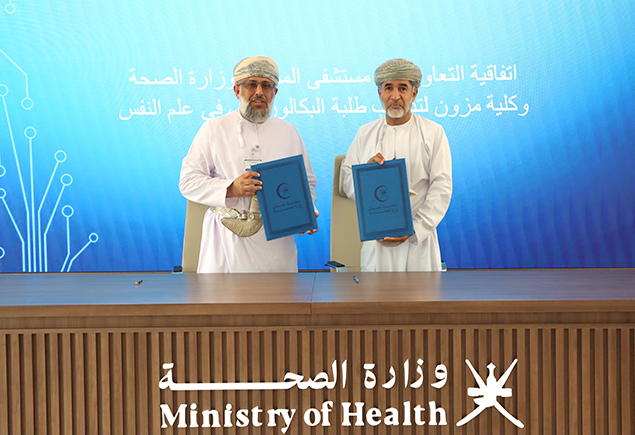
At the end of the ceremony, H. E. Dr. Ahmed Salim Al Mandhari, WHO Regional Director of Eastern Mediterranean Region handed over H.E. Dr. Mohammed Saif Al Hosni, MOH’s Undersecretary for Health Affairs the WHO Certification for validation of the elimination of mother-to-child transmission (EMTCT) of HIV and syphilis.
Furthermore, His Excellency the Undersecretary for Health Affairs honored the project’s working teams.
The EMTCT of HIV and Syphilis project was inaugurated in the Sultanate of Oman by a Ministerial decision of His Excellency Minister of Health No. (108/2020) on 28 July 2020. The decision stipulated the formation of a national committee to revise and improve the policies concerning EMTCT of HIV and Syphilis project. (17) experts of various specialties were nominated. The committee was divided into four areas that form foundational requirements for validation; program and service delivery, data, laboratory, and human rights, gender equality and community involvement.
Each area involves an independent technical working group that reviews activities according to WHO assessment lists through conducting interviews and visits to concerned work sites in addition to documenting the achievements and areas for improvements. Outcomes were then presented in the national committee meeting for discussion and action. Several meetings and deliberations were held with WHO experts in Sultanate of Oman, EMR office in Qairo, and WHO Headquarter, Geneva.
It is due to the Sultanate of Oman’s firm commitment to policy and public health, resilient health system; access to high quality maternal and child services, monitoring systems, and community involvement the Sultanate has been validated.
There are many factors that contribute in eliminating EMTCT of HIV and syphilis, which can be outlined in the presence of wise leadership committed to achieving and sustaining the EMTCT of HIV and syphilis, the inclusion of primary health care institutions that provide care to mother and child in all the governorates, high-quality laboratory network, and the existence of sophisticated systems for HIV treatment in the country. Furthermore, presence of electronic system in all MOH and other health institutions as well at private health establishments, multi-sectoral cooperation, and EMTCT national committee and technical working groups have facilitated this tremendous achievement.
The Ministry of Health will keep working on the recommendations of the Global Validation Advisory Committee (GVAC) for EMTCT to maintain the Sultanate of Oman’ s achievement in Eliminating Mother to Child Transmission of HIV and Syphilis, which will be reviewed by GVAC on March 2025.
In addition, the Ministry will accelerate public-private partnerships to prevent and control HIV and sexually transmitted infections, along with raising awareness among health workers and the people in the Sultanate of Oman.