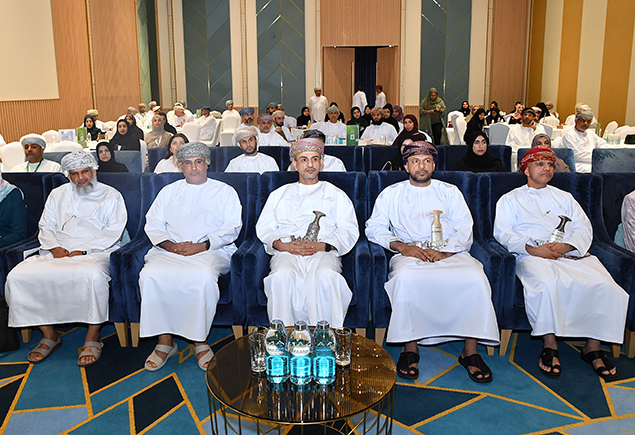
The National "One Health" Workshop, organized by the Ministry of Health, commenced today (Monday) at Maani Muscat Hotel. The three-day event is held in cooperation with the Ministry of Agriculture, Fisheries and Water Resources, the Environment Authority, the World Health Organization (WHO), and the Food and Agriculture Organization of the United Nations (FAO).
The opening was patronized by H.E. Dr. Abdullah Ali Al-Amri, Chairman of the Environment Authority, in the presence of Bader bin Saif Al-Rawahi, Acting Director General of the National Center for Disease Control and Prevention at the Ministry of Health, along with representatives from various sectors.
The workshop targets (70) participants representing various sectors related to the One Health approach. These include the Ministry of Health, the Ministry of Agriculture, Fisheries and Water Resources, the Environment Authority, Muscat Municipality, the Ministry of Transport, Communications and Information Technology, Oman Vision 2040 Implementation Follow-Up Office, the Authority for Public Services Regulation, Academics from Sultan Qaboos University, and Al A'sharqiyah University. The private sector is also represented, including Mazoon Dairy and Al-Bashayer Meat.
Over three days, the workshop will feature interventions from various sectors to highlight the importance of applying the One Health approach, and establish a sustainable national mechanism for multi-sectoral coordination in the field of One Health, defining clear roles and responsibilities. Furthermore, the workshop aims to enhance the multi-sectoral One Health approach and gather information from sectors related to the use of the One Health approach to address zoonotic diseases, antimicrobial resistance (AMR), and other One Health challenges.
The One Health approach is considered a comprehensive global orientation that links human, animal, and plant health, while enhancing cooperation and coordination among various sectors and relevant entities to prevent health risks and respond effectively.
Previous national plans (such as programs for combating vectors and antimicrobial resistance) have demonstrated a direct and decisive impact on the public health system. The precise, multi-sectoral coordination and epidemiological surveillance contributed to reducing infection rates of communicable diseases, limiting the spread of epidemics, and protecting the community with a proactive vision based on scientific data.
This new discussion workshop was held to enable ministries and agencies to build on the institutional interaction and integration of previous successes. This ensures preparedness and response to One Health challenges and shared diseases, shifting from managing each sector separately to a broader framework that includes stakeholders representing government entities.