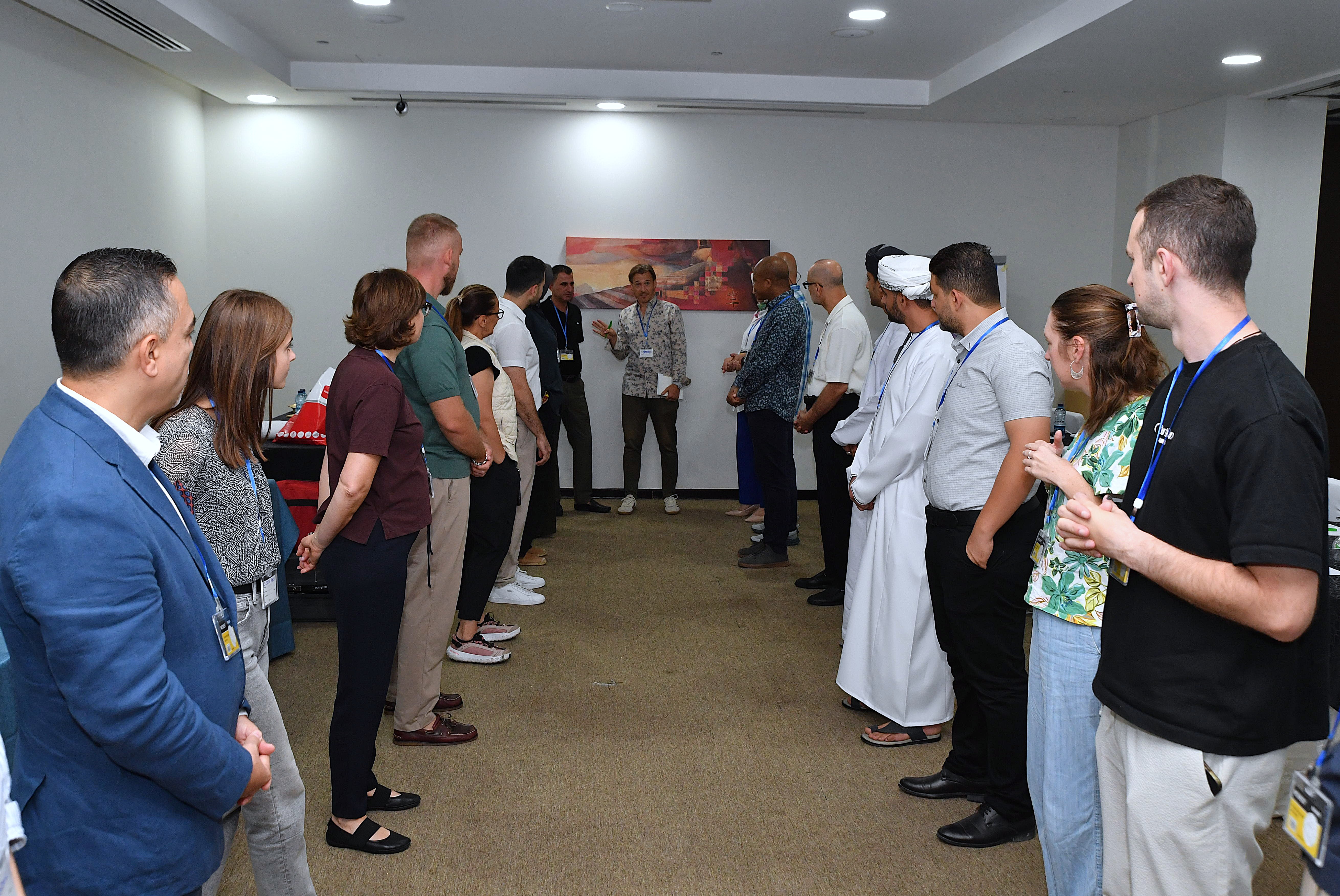
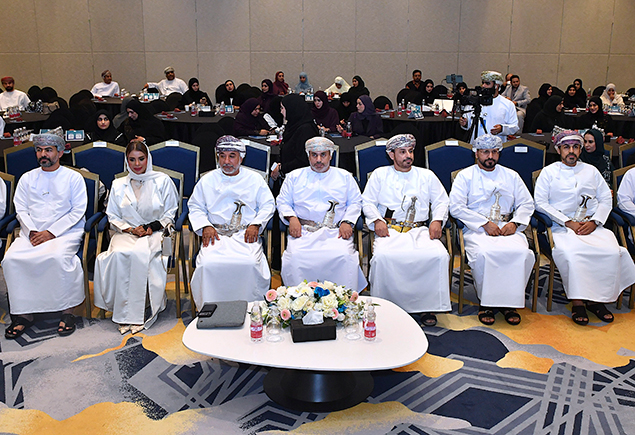
A training workshop for emergency medical teams on medical emergency response in the areas of chemical, biological, radiological and nuclear (CBRN) incidents, medical evacuation (MEDEVAC), and burns was launched today (Sunday) at the Holiday Inn Hotel.
The workshop is hosted by the Sultanate of Oman, represented by the National Centre for Emergency and Health Risk Management at the Ministry of Health (MOH), in cooperation with the World Health Organization (WHO), and brings together international medical teams from several countries in the Eastern Mediterranean Region and Europe, including Oman, Syria, Jordan, Lebanon, Turkey, and Ukraine, as well as partners from Médecins Sans Frontières (MSF).
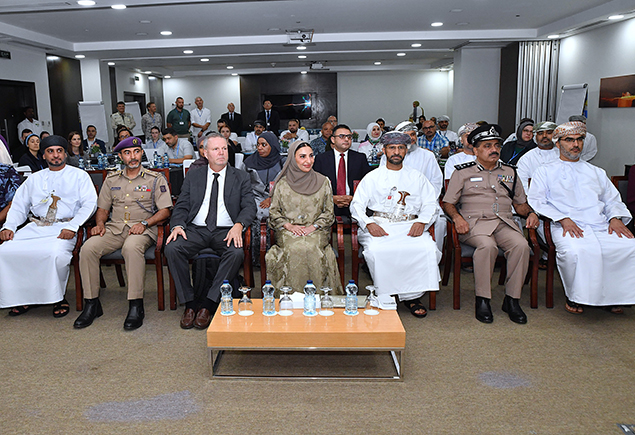
The workshop was inaugurated under the patronage of Dr. Siham Salem Al Sinani, Chief Executive Officer of the University Medical City, in the presence of Dr. Mohammed bin Saif Al Busafi, MOH Director of the National Centre for Emergency and Health Risk Management, along with a number of officials, directors and staff from the Ministry of Health and the WHO Office in Muscat.
In his remarks, Dr. Mohammed Al Busaifi highlighted the ongoing cooperation between the Ministry of Health and the World Health Organization in strengthening preparedness, health security, and emergency and disaster response, building national capacities, exchanging expertise, applying international standards, and enhancing coordination and cooperation in health emergency management.
Dr. Al Busaifi added that the National Emergency Medical Team (NEMT) is one of the largest and most important projects undertaken by the Centre in cooperation with the World Health Organization (WHO). He noted that the Centre is currently implementing the project’s various phases in accordance with the WHO’s internationally recognized standards for Emergency Medical Teams (EMT Standards).
He explained that the team is progressing through several stages as part of its efforts to obtain international accreditation and classification in accordance with the WHO EMT Standards. The current phase includes developing and drafting the regulations, legislation, and procedures governing the team, as well as training and qualifying its members and enhancing their preparedness in line with the standards adopted by the World Health Organization.
In his remarks, H.E. Dr. Asmus Hamreisch, WHO Representative in the Sultanate of Oman, said that investing in preparedness is aligned with Oman’s health priorities and the aspirations of Oman Vision 2040. He added that the national health policy seeks to build a resilient health system that is responsive to the needs of the population and supported by qualified national competencies capable of responding to emergencies and disasters.
He noted that the training course brings together three important areas: preparedness for and clinical management of chemical, biological, radiological and nuclear (CBRN) incidents, burn care, and medical evacuation (MEDEVAC). While each area requires specialized expertise, emergencies often require these capabilities to be integrated, thereby strengthening individual knowledge and the ability to work as part of a coordinated response.
The WHO Representative in the Sultanate of Oman highlighted that this initiative represents an important investment in Oman’s national capacities, stressing that strengthening the knowledge, skills and preparedness of national emergency medical teams is essential to ensuring a competent and coordinated workforce when emergencies occur. He noted that the WHO’s role is to support countries in translating data, technical guidance and international experience into practical capacities tailored to their national health systems and priorities.
The Sultanate of Oman was selected to host this regional training workshop in recognition of its strong international reputation and its efforts to establish and formally register the National Emergency Medical Team in cooperation with the World Health Organization. Oman also has the expertise and qualified personnel required to respond to hazardous materials incidents.
The training workshop aims to strengthen national and regional capacities in medical emergency response, mass-casualty incidents, and medical evacuation, while facilitating the exchange of expertise and best practices among specialists in these fields.
The workshop includes lectures and practical exercises focusing on the principles of medical response to incidents involving chemical, biological, radiological and nuclear (CBRN) hazards, as well as burn management and medical evacuation. It also seeks to enhance coordination among the various stakeholders in responding to emergencies and complex incidents.
By hosting this training workshop, the Sultanate of Oman reaffirms the importance of partnership and cooperation between Oman, the World Health Organization (WHO), and friendly and brotherly countries in strengthening preparedness for medical emergency response, building capacities, and exchanging expertise at both the national and regional levels.
It is worth noting that the Ministry of Health, represented by the National Centre for Emergency and Health Risk Management, is working with the World Health Organization on the international accreditation process for the National Emergency Medical Team, in coordination and collaboration with the Medical City for Military and Security Services, the University Medical City, the Civil Defense and Ambulance Authority, and the Ministry of Health’s healthcare institutions. These efforts aim to ensure readiness and preparedness to respond to various types of emergencies.