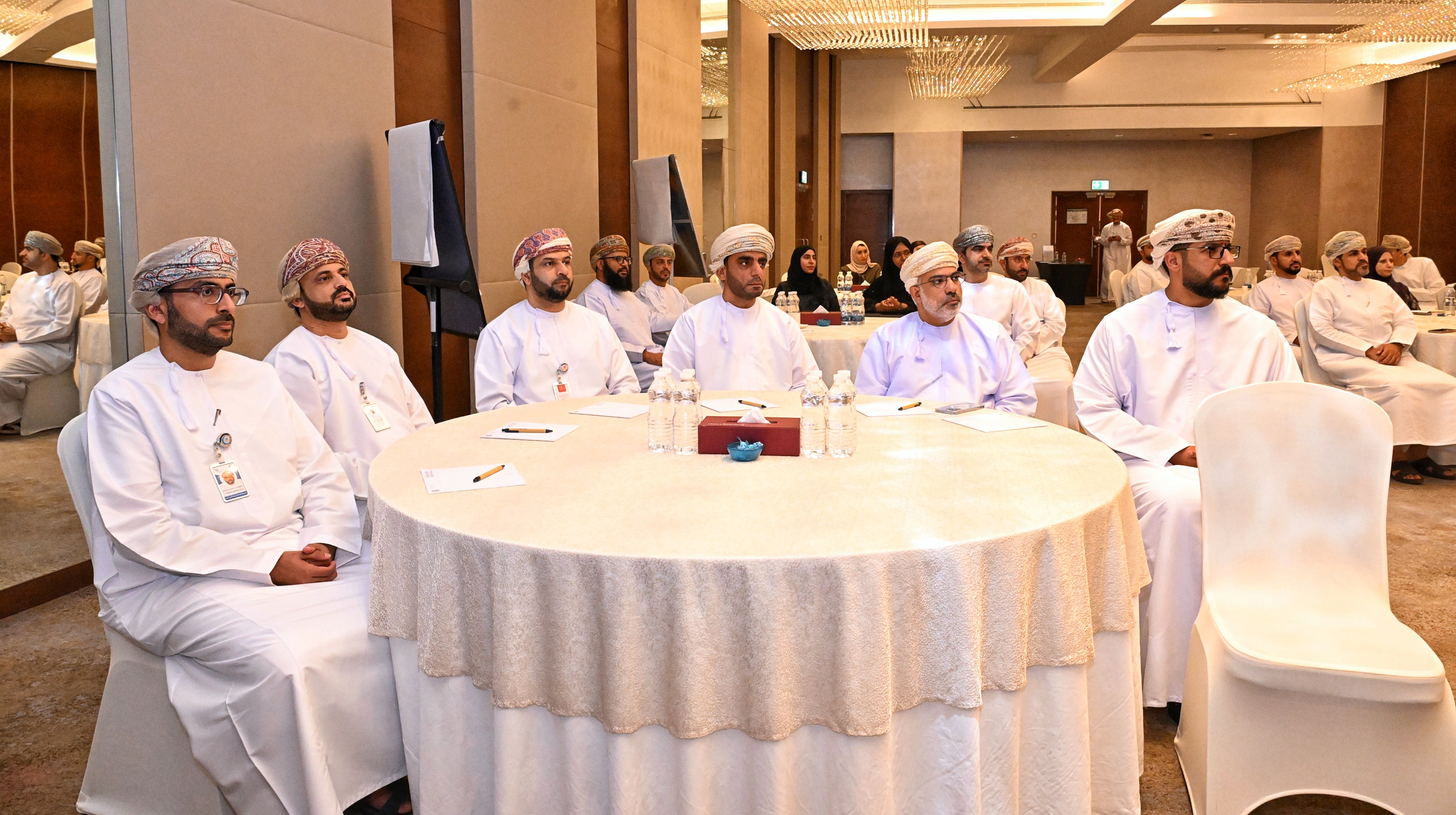
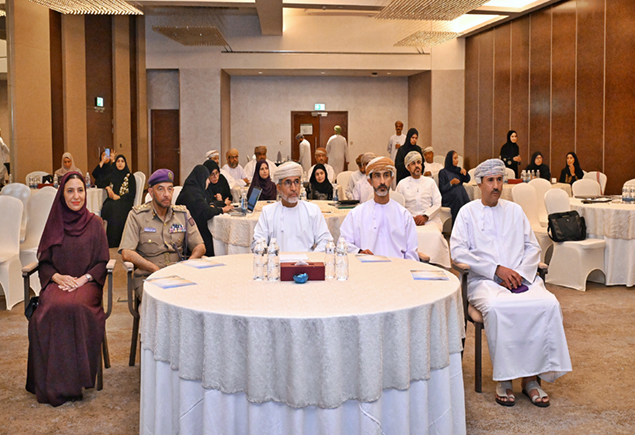
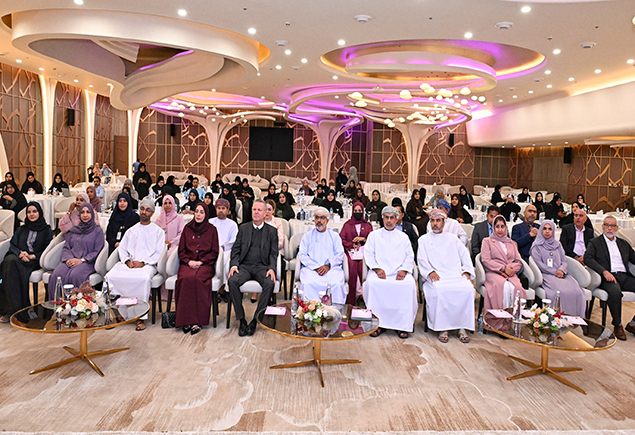
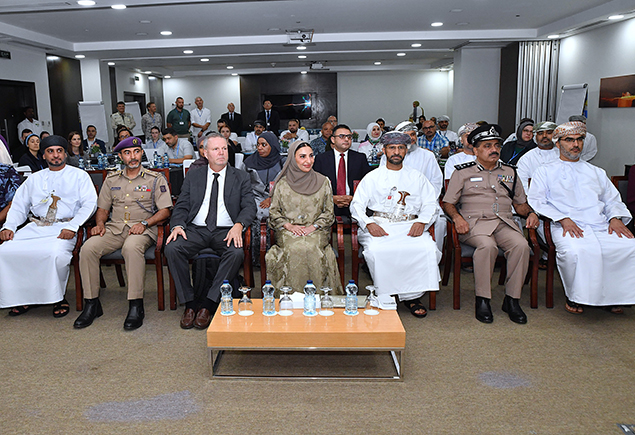
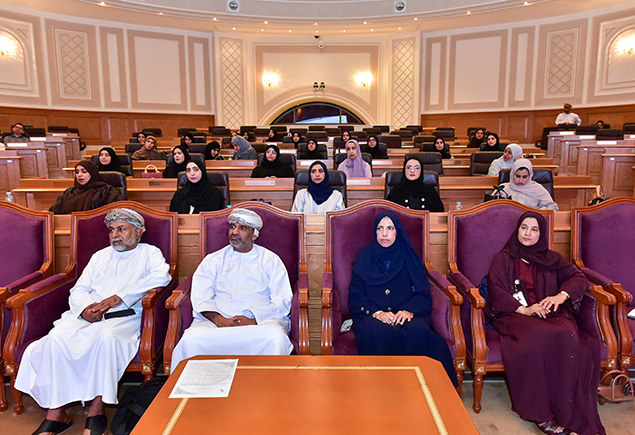
The Ministry of Health (MOH) concluded the final phase of its specialized training program on Evidence-Informed Policy-Making, held under the patronage of H.E. Dr. Ahmed bin Salem Al Mandhari, MOH Undersecretary for Health Planning and Regulation. The closing ceremony, held on 9 July, was attended by a number of Their Excellencies representing key stakeholders from the health and scientific research sectors, as well as organizations that support evidence-based decision-making.
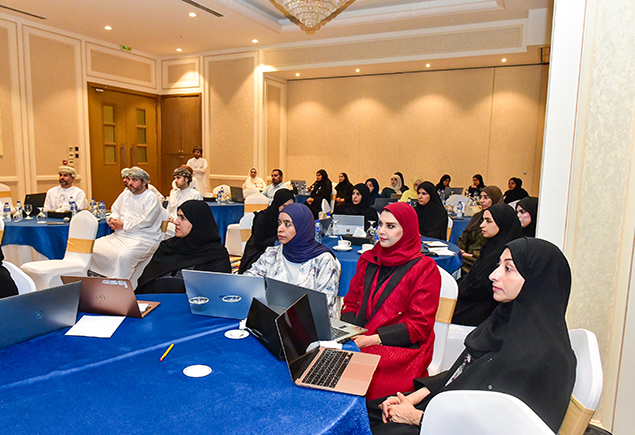
The six-month training program was delivered under the supervision of a distinguished team of national experts in collaboration with the Knowledge to Policy (K2P) Center at the American University of Beirut (AUB). It aimed to strengthen the capacities of more than 40 participants from diverse professional backgrounds, including physicians, allied health professionals, and administrative personnel.
The training focused on strengthening participants’ specialized competencies in knowledge translation, covering the full evidence-to-policy process—from identifying priority challenges and defining policy problems to systematically searching for and appraising scientific evidence using transparent and verifiable methodologies. Participants were also trained in conducting policy dialogues to ensure that proposed policy options are aligned with the local context while drawing on the accumulated expertise of specialists in developing practical, evidence-informed solutions.
The program culminated in the development of six policy briefs, derived from the strategic programmes endorsed under the Eleventh Five-Year Development Plan.
H.E. Dr. Ahmed Al Mandhari emphasized that equipping these professionals with the necessary expertise will significantly enhance their ability to identify and synthesize the most relevant scientific evidence and integrate it with local data through a systematic and scientifically robust approach.
For her part, Dr. Sultana Al Sabahi, Director of the Expenditure Efficiency and Financial Analysis Center, Health Economics Specialist, and Decision Support Specialist, pointed out that transforming scientific knowledge into evidence-informed programmes, policies, and decisions represents a reliable scientific approach. She highlighted that developing the capacities of professionals through practical application, rather than focusing solely on theoretical knowledge, enhances their readiness to effectively undertake this role.
Al Sabahi further emphasized that one of the key pillars for strengthening the culture and practice of evidence-informed decision-making is the development of national expertise in this field.